
Understanding Deferred Revenue and Accrued Expense

Section 113 of the SECURE 2.0 Act of 2022 provided that employers can offer their employees de minimis financial incentives to make elective deferrals. These incentives may not exceed $250 in value, and, in general, are includible in employees’ income. To deduct interest you paid on a debt, review each interest expense to determine how it qualifies and where to take the deduction.

Liabilities vs. expenses: Key differences explained
- Deferred incomes are the incomes of a business that the customers of the business have already paid for but the business cannot recognize as income until the related product is provided to the customers.
- However, you may exclude the full amount of the life insurance proceeds if the following apply.
- This method of accounting also tends to smooth out earnings over time.
- In accounting, the concepts of deferred revenue and deferred expenses play a vital role in maintaining accurate financial statements.
- You don’t need to track these entries manually or worry about forgetting to reverse them; Ramp handles the full lifecycle so expenses always hit the right period.
If the payments are more than the welfare benefits you would have received, the entire amount must be included in your income as wages. Don’t include in your income governmental benefit payments from a public welfare fund based upon need, such as payments due to blindness. Payments from a Bookkeeper360 Review state fund for the victims of crime shouldn’t be included in the victims’ incomes if they’re in the nature of welfare payments. Don’t deduct medical expenses that are reimbursed by such a fund. You must include in your income any welfare payments that are compensation for services or that are obtained fraudulently. If you were subject to the AMT in the year of the deduction, you’ll have to refigure your tax for the earlier year to determine if the recovery must be included in your income.

Accounting for Deferred Expenses
- If your employer offers an HRA that qualifies as an accident or health plan, your coverage under the HRA and reimbursements of your medical care expenses from the HRA generally aren’t included in your income.
- She won’t pick up the phone or answer her email, and her answering machine says she’s in Cuba.
- In both situations, the partner can deduct the contribution made to the partner’s HSA.
- However, under the special limitation period, you can also file a claim for 2020 as long as you file the claim by August 3, 2025.
- However, you must include the fair rental value of the home or the housing allowance as earnings from self-employment on Schedule SE (Form 1040) if you’re subject to the self-employment tax.
Since accrued expenses are obligations that need to be paid by the company, they are classified as liabilities by the company. Mostly, they are supposed to be settled within 12 months by the company, and therefore, they are classified as Current Liabilities. Examples of other expenses that usually need an accrual adjusting entry resulting in a current liability include wages, utilities, bonuses, taxes, and interest. You’ll often encounter catch-all line items on the balance sheet simply labeled “other.” Sometimes the company will provide disclosures in the footnotes about what’s included, but other times it won’t.
Creating Accurate and Effective Financial Projections for Your Business
Conversely, deferred expenses are capitalized and amortized over time, affecting future tax liabilities. Understanding deferred expenses involves a blend of accounting principles, strategic judgment, and regulatory compliance. It’s a balancing act between ensuring accurate financial reporting and managing cash flows effectively. As such, it’s a topic that continues to challenge and intrigue financial professionals, auditors, and regulators accrual vs deferral alike. By understanding and managing accrued and deferred expenses effectively, businesses can maintain accurate financial records, comply with accounting standards, and portray a true picture of their financial performance and position.
- Adoption benefits are reported by your employer in Form W-2, box 12, with code T.
- Using accruals minimizes the risk of having residual elements of business transactions appear in subsequent financial statements.
- In this case, the company would recognize 1/12 of the deferred income monthly.
- You must include the FMV of the shares in your income on Schedule C (Form 1040) in the year you receive them.
- For example, a gym collecting yearly membership fees in January might be tempted to invest heavily or expand.
- The business collects the entire amount at the beginning of the contract but has yet to offer the complete service.
- In most cases, no-additional-cost services are excess capacity services, such as airline, bus, or train tickets; hotel rooms; and telephone services.
Go to IRS.gov/Payments for information on how to make a https://www.bookstime.com/ payment using any of the following options. The IRS is committed to serving taxpayers with limited-English proficiency (LEP) by offering OPI services. The OPI Service is a federally funded program and is available at Taxpayer Assistance Centers (TACs), most IRS offices, and every VITA/TCE tax return site. Go to IRS.gov/SocialMedia to see the various social media tools the IRS uses to share the latest information on tax changes, scam alerts, initiatives, products, and services. Don’t post your social security number (SSN) or other confidential information on social media sites. Always protect your identity when using any social networking site.
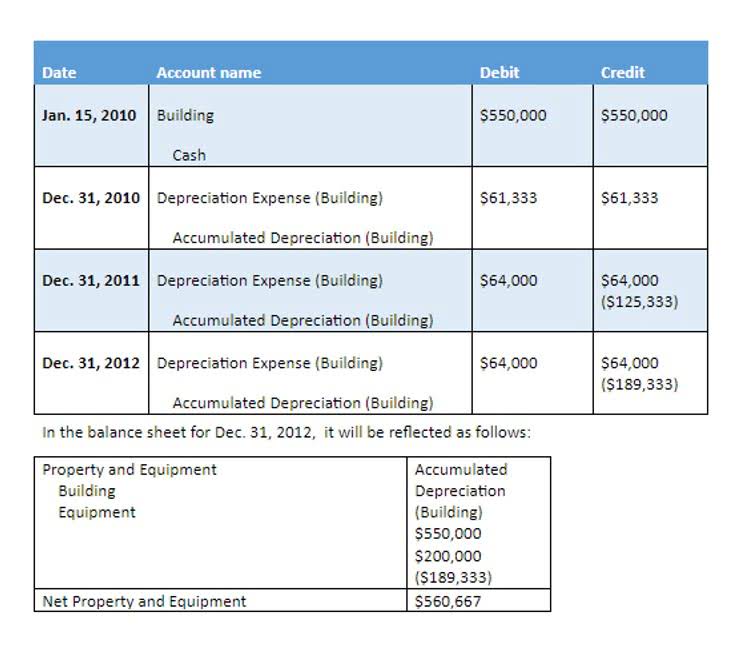
When are they recorded?

Deferred revenue, also known as unearned revenue, refers to advance payments a company receives for products or services that are to be delivered or performed in the future. Proper cutoff application distinguishes between period-specific expenses and prepayments, maintaining compliance with accrual accounting principles. Deferred revenue can be described as the payments a company receives in advance for goods or services that are to be delivered or performed in the future. It’s a common practice among businesses that offer subscription-based products or services that require upfront payments. For instance, a music streaming service may collect annual subscription fees at the start of the year, or a gym may collect membership fees at the beginning of the month. These advance payments are recorded as a liability on the company’s balance sheet under the name of deferred revenue.
Rents From Personal Property
Deferred expenses, or prepaid expenses, are payments made in advance, recorded as assets until the related benefit is realized, distinguishing cash flow timing in cash accounting. Understanding the timing and recognition of accrued versus deferred expenses is crucial for accurate financial reporting and cash flow management. Accrued expenses often yield more consistent financial results as companies can include recurring transactions in their financial reports that may not yet have been paid. In addition, accrued expenses may be a financial reporting requirement depending on the company and its Securities and Exchange Commission filing requirements. Under the revenue recognition principles of accrual accounting, revenue can only be recorded as earned in a period when all goods and services have been performed or delivered.